Ukraine’s membership of the EU will significantly broaden the range of sources of law available to Ukrainian judges: findings from the implementation of the EU ‘Pravo-Justice III’ project
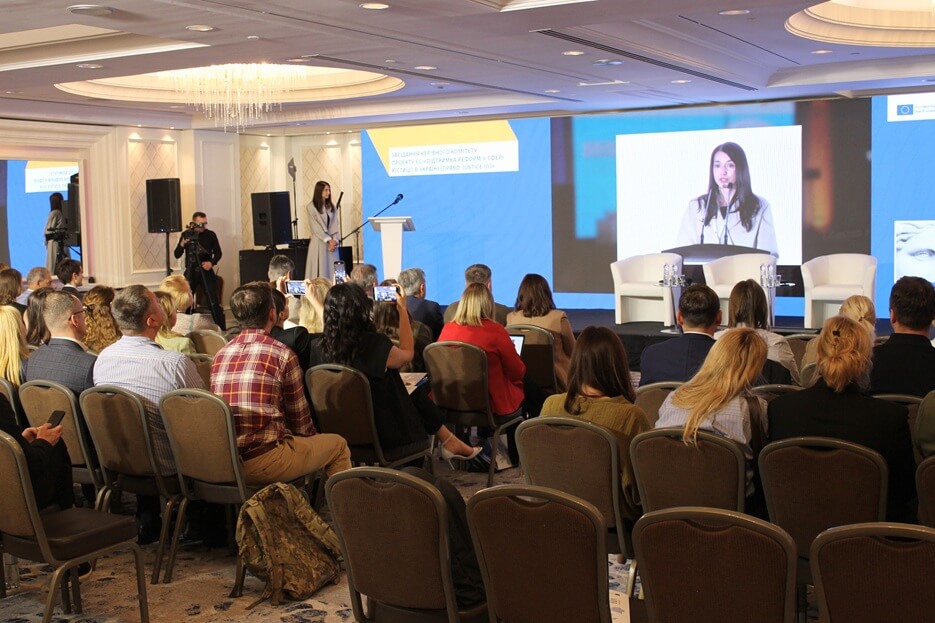
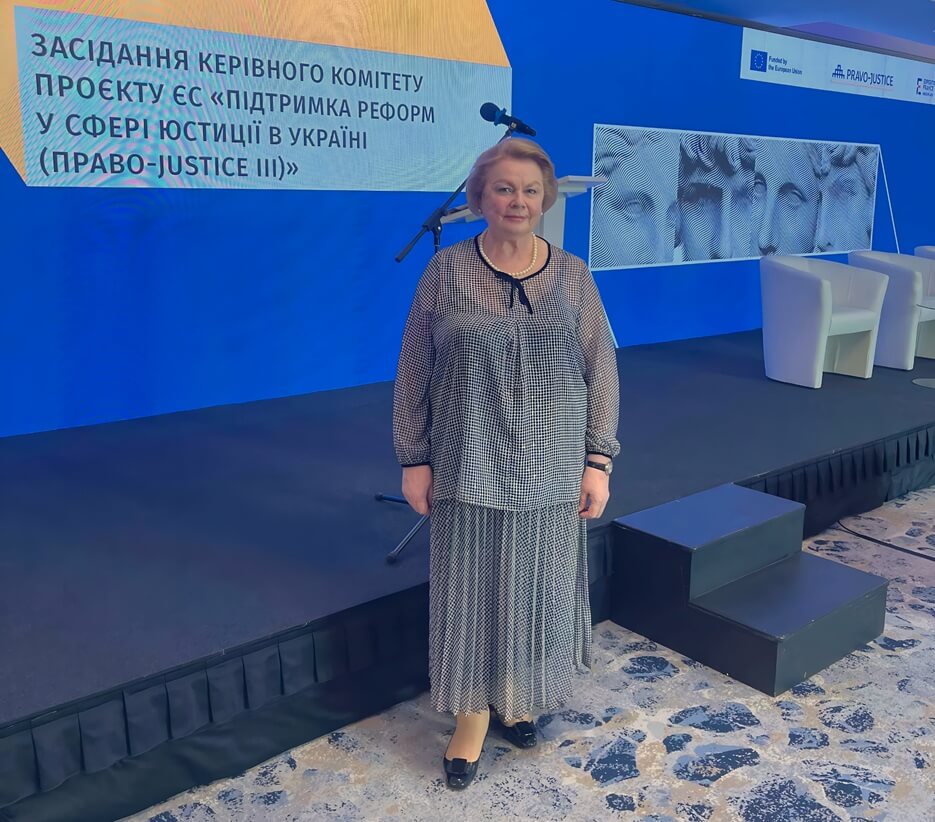
The final meeting of the Steering Committee of the EU project ‘Support for Justice Reforms in Ukraine (Pravo-Justice III)’ took place in Kyiv. The event, held under the slogan ‘Driving Justice Reforms on the Way to the EU’, brought together representatives of the Ukrainian authorities, the judiciary, the prosecutor’s office, human rights organisations and international partners to discuss key achievements and the next steps in reforming the justice sector.
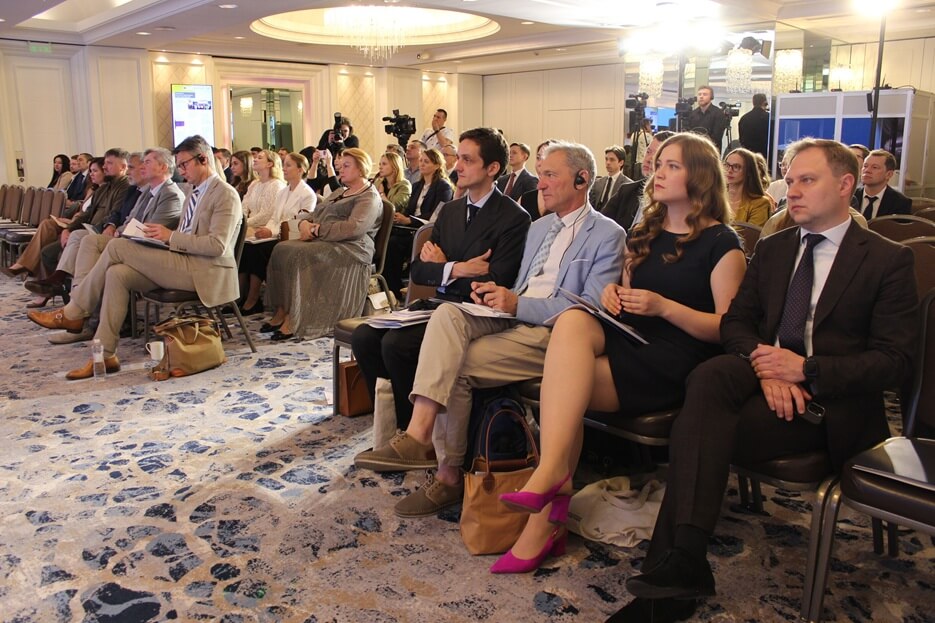
The National School of Judges of Ukraine was represented at this event by the Acting Rector, Nataliia Shuklina, and the Head of the Training Laboratory for the Study of European Union Law, Nataliia Akhtyrska.
The session was opened by the Acting Minister of Justice of Ukraine and Chair of the Steering Committee, Liudmyla Sugak. Gaël Vésier, Ambassador Extraordinary and Plenipotentiary of the French Republic to Ukraine, and Asier Santillán Luzuriaga, Head of the relevant department at the EU Delegation to Ukraine, also addressed the participants with welcoming remarks. Oksana Tsymbrivska, Head of the EU ‘Pravo-Justice’ Project, presented the main results and achievements of the initiative.
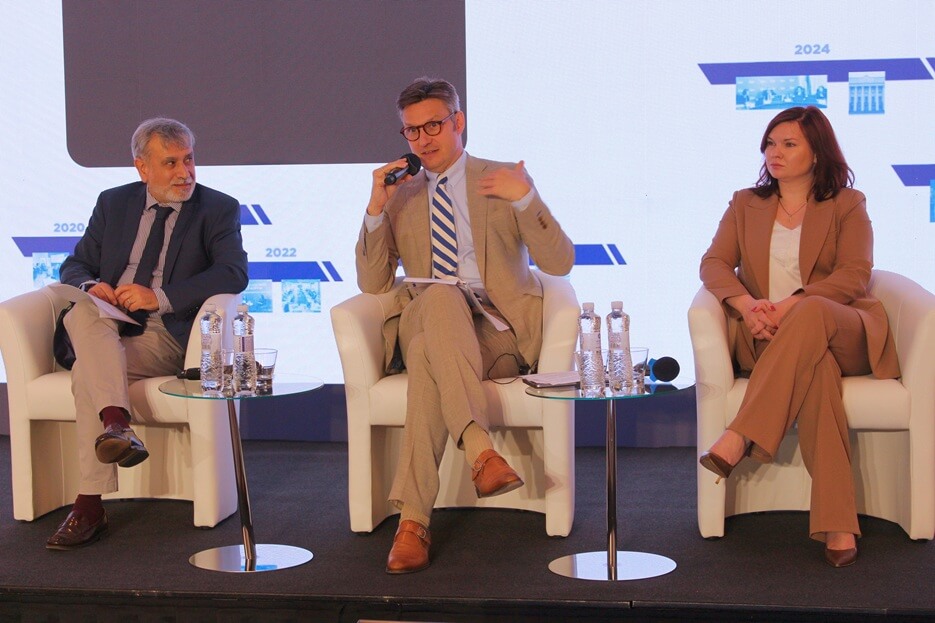
The programme of the event comprised four thematic panel discussions focusing on accountability for international crimes, judicial reform and reform of the public prosecution service, the enforcement of court rulings and the protection of property rights, as well as support for the process of European integration in the justice sector.
During the panel on supporting the European integration process, Nataliia Akhtyrska noted that the European Union, as defined by the Court of Justice of the European Union, constitutes a new legal order. Accordingly, Ukraine’s accession to the European Union will significantly expand the system of sources of law that Ukrainian judges will have to work with. They must learn to understand the new hierarchy of legal norms, reinterpret the principle of the rule of law, master the mechanism for referring cases to the Court of Justice of the European Union for preliminary rulings, and learn to apply these correctly in their practice.
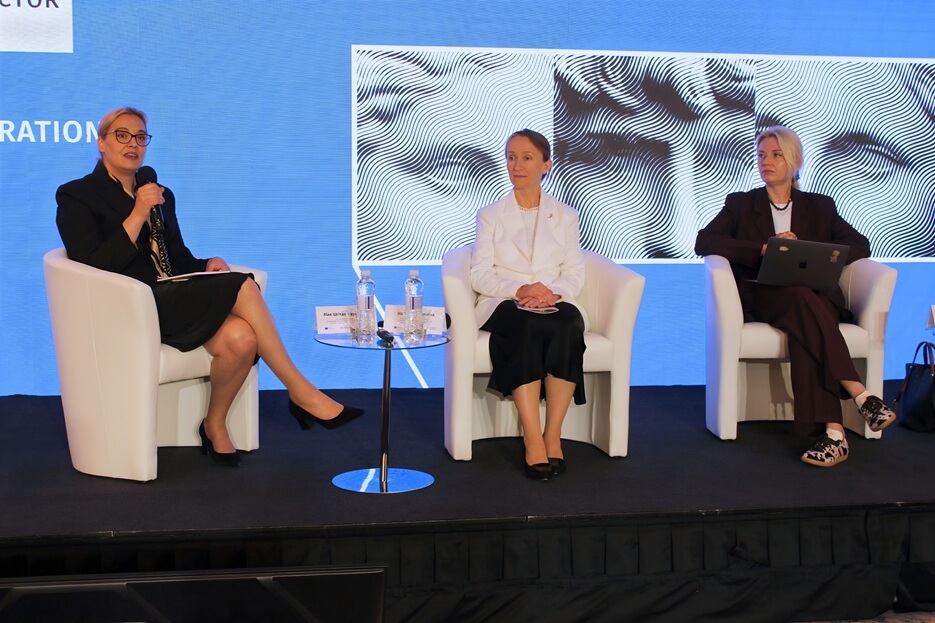
The representative of the NSJU emphasised that this is precisely why Ukraine now faces a number of important challenges, particularly following its granting of candidate status for membership of the European Union. Furthermore, she recalled that Opinion No. 9 of the Consultative Council of European Judges emphasises the need for a paradigm shift in the training of judges. In her view, this process should involve not only the development of practical skills but also the fostering of a new culture of administering justice, so that the judicial system fully meets the needs and expectations of modern society.
Nataliia Akhtyrska also drew attention to the fact that the European Commission has set a clear benchmark: for Ukraine to make successful progress towards EU membership, at least 65 per cent of judges must undergo training in EU law each year. That is precisely why the National School of Judges of Ukraine, as the institution responsible for training the judiciary, decided in 2024 to establish a Training Laboratory for the Study of European Union Law. Prior to its establishment, EU law was studied mainly on an ad hoc basis – depending on the availability of experts. However, since December 2024, it has become a compulsory and integral part of all the National School of Judges’ educational programmes, regardless of the court’s instance, jurisdiction or level.
The speaker emphasised that the results of this work are already evident. During 2025, 8,140 people, including judges and judicial assistants, took part in the training. In the first half of 2026 alone, the number of participants exceeded 7,000, of whom more than 2,000 were judges. According to her, these results were achieved thanks to close cooperation with the EU ‘Pravo-Justice’ Project, which provided access to the online courses ‘Introduction to EU Law’ and ‘EU Law in the Field of Criminal Justice’, as well as organising a summer school and study visits to the Court of Justice of the European Union.
Natalia Akhtyrska specifically highlighted the role of the chief international expert of the EU ‘Pravo-Justice’ Project, Virgilijus Valančius, a judge at the Court of Justice of the European Union from 2016 to 2023, describing him as one of the key ideologists and architects of the integration of EU law into Ukraine’s judicial education system. According to her, in 2025 alone he personally delivered 58 lectures in Ukrainian for judges and is continuing this work in 2026. She believes that the presentations by the judge of the Court of Justice of the European Union have significantly boosted confidence in the training programme and generated genuine interest in the subject matter.
The speaker emphasised that judges are already actively submitting requests for the preparation of specialised teaching materials and practical guides summarising the case law of the Court of Justice of the European Union in specific areas. This is no longer a matter of a general introduction, but of highly specialised fields: competition law, extradition, electronic evidence, personal data protection, and so on. Requests are also being received regarding the preparation of compilations of translations of CJEU judgments for use in specific court cases.
A representative of the National School of Judges of Ukraine explained that such interest is entirely natural, as the Supreme Court has already stated that Ukrainian courts may use the case law of the Court of Justice of the European Union as a source of argumentation and a guide for forming legal positions, despite the fact that Ukraine is not yet a member of the European Union.
At the end of her speech, Nataliia Akhtyrska emphasised that the judges are ready for further training, and that the National School of Judges of Ukraine will continue to provide training tailored to their needs. She expressed her gratitude to the partners for their understanding of the challenges facing the judicial system and assured them that the EU ‘Pravo-Justice’ Project would always find a reliable partner in the National School of Judges of Ukraine for the implementation of joint initiatives.
Project Manager Oksana Tsymbrivska summarised the meeting. The event concluded with an informal get-together, during which participants were able to continue their discussions in a professional setting.
 Вища кваліфікаційна комісія суддів України
 Сайт Президента України
 Верховна Рада України
 Урядовий портал
 Судова влада України
 Вища рада правосуддя