NSJU is developing a strategic vision for judicial training on EU law up to 2030
European integration necessitates changes to the training of judges, their practice and even their professional culture, as national judges must administer justice in accordance with the needs and expectations of modern society and in compliance with the principles recognised by democratic states. This evolution must, first and foremost, influence the training of judges, the nature of relations between international judicial institutions and the hierarchy of legal norms that judges must adhere to as the range of legal sources expands.
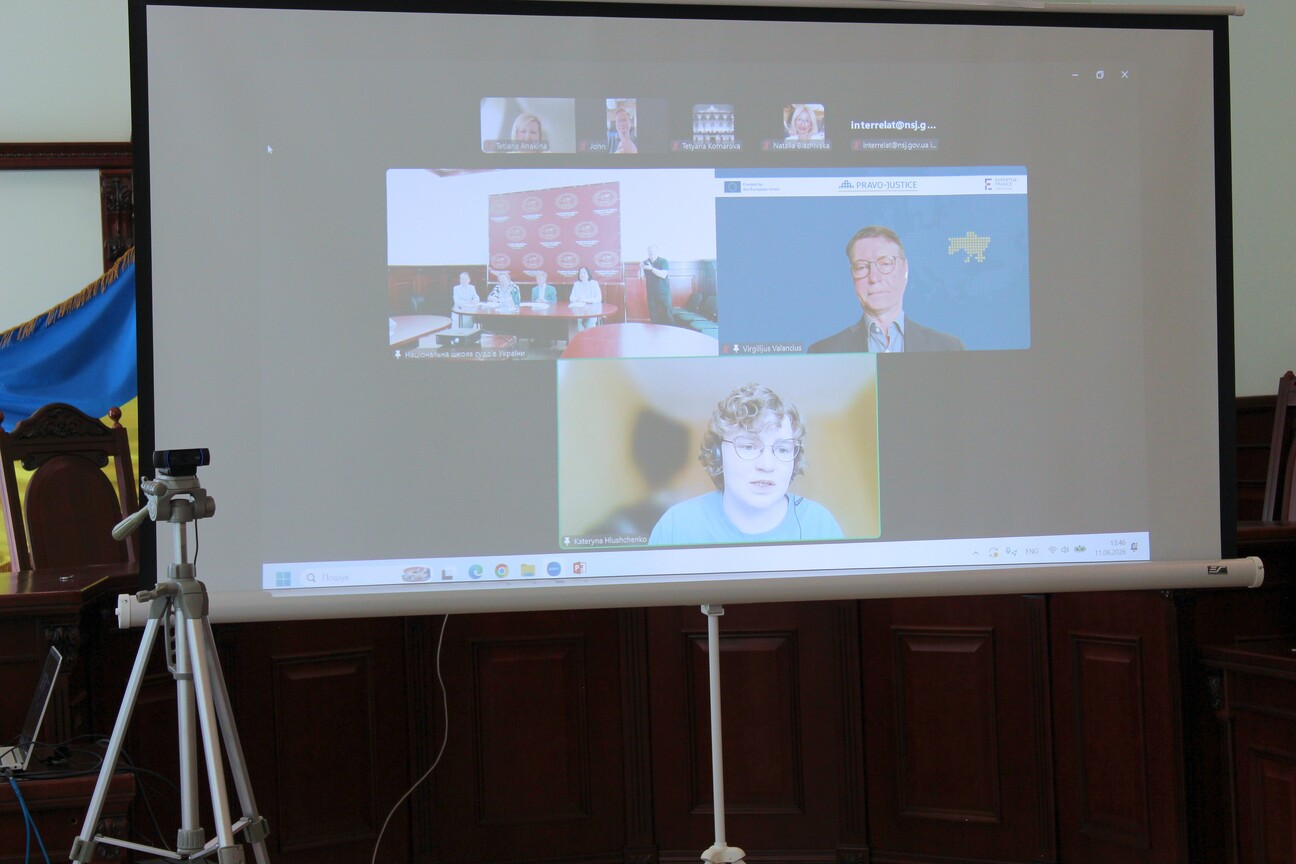
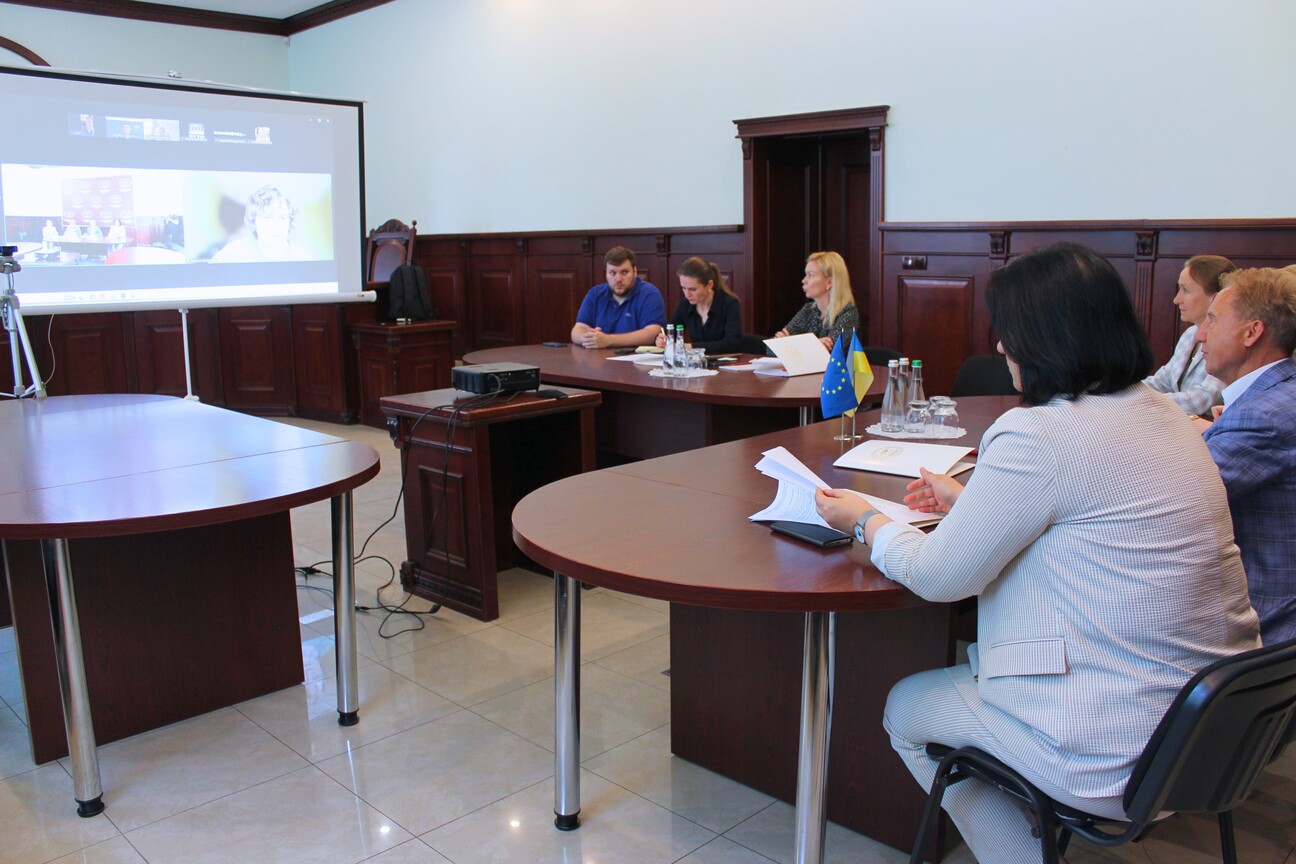
This issue was the subject of discussion among participants at the first meeting of the Advisory Board of Experts (ABE) at the Training Laboratory for the Study of European Union Law of the National School of Judges of Ukraine, which took place on 11 June 2026. The establishment of this Board was an important step in implementing the recommendations of the European Union’s expert mission under the TAIEX technical assistance instrument and is aimed at ensuring the strategic development of judicial education in line with best European practices.
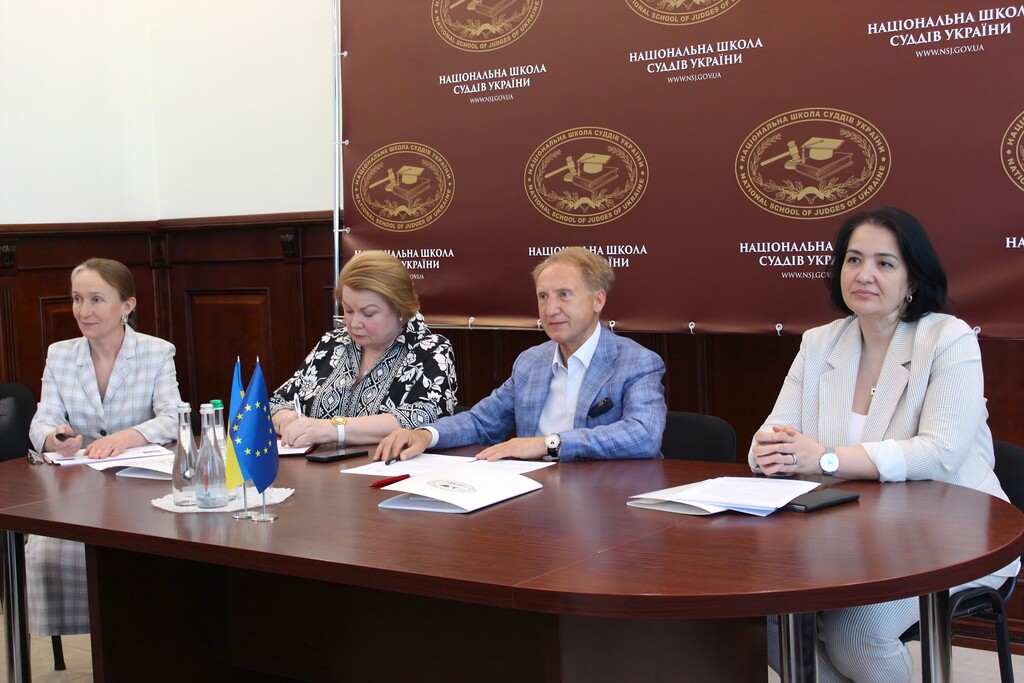
The Council comprises: Virgilijus Valančius – chief international expert for the EU ‘Pravo-Justice’ Project, Judge at the Court of Justice of the European Union (2016–2023); Professor Fryderyk Zoll – one of Europe’s leading scholars in the field of private law; Dr John Morijn – Professor of Law and Politics at the University of Groningen; Halyna Yurovska – Judge of the Constitutional Court of Ukraine; Olesia Radyshevska and Nataliia Blazhivska – Judges of the Supreme Court in the Administrative Court of Cassation; Tetiana Komarova – Head of the Department of European Union Law at the Yaroslav Mudryi National Law University, and Tetiana Anakina – Associate Professor in the same department; Nataliia Akhtyrska – Head of the Training Laboratory for the Study of European Union Law.
Opening the first meeting, the Rector of the NSJU Mykola Onishchuk emphasised the importance of institutional development in the training of judges and judicial system staff on matters of European Union law, in the context of Ukraine’s European integration process and the fulfilment of obligations associated with EU membership.
The meeting participants considered the report on the activities of the Training Laboratory for the Study of European Union Law for the first half of 2026. The laboratory’s achievements in organising specialised training events, developing training programmes and fostering international cooperation in the field of judicial education were highlighted.
A key item on the agenda was the discussion of approaches to developing the Strategy for the Training of Judges in European Union Law for 2027–2030. Participants paid particular attention to studying and adapting the experience of EU Member States that had joined the European Union during its 2004–2007 enlargement, as well as to the need for the broad involvement of international partners, donor organisations and national stakeholders in shaping such a strategy.
 |
 |
During the discussion, Board members emphasised the importance of a systematic approach to the training of judges, judicial assistants and court staff on matters relating to European Union law, as well as the need to ensure that training programmes comply with European standards and reflect current trends in judicial education.
Following the meeting, priority areas for the Council’s future work were identified and the next steps were outlined for formulating a strategic vision for the development of training in European Union law for Ukraine’s judicial system. A Chair of the Advisory Council of Experts was also elected: Olesia Radyshevska, a judge of the Supreme Court.
The Advisory Board of Experts will act as a permanent collegial advisory body attached to the Training Laboratory for the Study of European Union Law at the National School of the Judiciary, providing expert support, strategic planning and the development of international cooperation in the field of judicial training in European Union law.
 Вища кваліфікаційна комісія суддів України
 Сайт Президента України
 Верховна Рада України
 Урядовий портал
 Судова влада України
 Вища рада правосуддя